

Creatures of the Night
The 3d Ecological Restoration Summit at Diamond Mountain Retreat Center
in partnership with Borderlands Restoration Network and SkyHarvest
This year’s summit volunteers will create habitat for the endangered Mexican long-nosed bat, recently confirmed in our area by the U.S. Fish and Wildlife Service and Bat Conservation International. With 160 agave plants—its preferred nectar source—provided by Borderlands Restoration Network and Bat Conservation International, we’ll plant a bat garden to support these vital nighttime pollinators. Strengthening their habitat helps the entire desert ecosystem thrive.
Our guest speakers will be presenting on bats, night time pollinators, nocturnal animals and the habitat they need to survive.
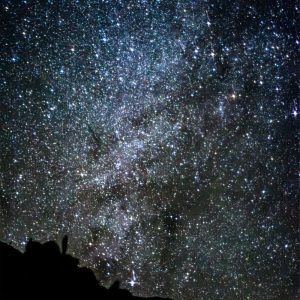
Enjoy Diamond Mountains Night Sky

Meal times. Exchanging ideas with experts.
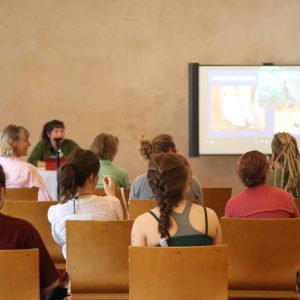
Presentations during the summit
When: Monday, September 22 – Saturday, September 27, 2025 (Monday being arrival day, and Saturday departure, summit days Tuesday till Friday
Where: Diamond Mountain Retreat Center, 3209 S Old Fort Bowie Rd, Bowie, AZ
What: This five-night experience includes
- Free pick up from Tucson Airport, healthy vegetarian food and shared lodging in unique eco cottages.
- A daily presentation from expert speakers
- Four hours/day of strong hands on ecological restoration
- Prepare the garden area with fencing
- Plant 160 agave
- Check/repair loose rock dams from previous summits
- Work on invasive weeds in riparian area around Bear Spring
- Plus optional yoga and meditation taught by Diamond Mountain Director Ven. Sunam, SkyHarvest Director Alix Rowland and Kat Ehrhorn, SkyHarvest Project Manager and Diamond Mountain Spiritual Caretaker
We encourage you to connect deeply with yourself while immersing in the land and sharing knowledge and caring with the other participants and facilitators.
The Speakers

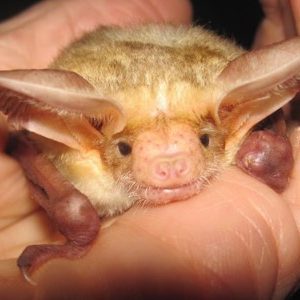
Masters of the Night Skies, Debbie C. Buecher, M.S
Debbie C. Buecher, M.S. is a wildlife biologist specializing in bats. Her Master’s topic was” Bat Diversity, Resource Use, and Activity Patterns along a Sonoran Desert Riparian Corridor”. She owns her own consulting company – Buecher Biological Consulting, which contracts with multiple Federal, State, and County agencies. She has been working with bats for over 30 years across Arizona and New Mexico.
Debbie’s talk will focus on how amazing our unique flying mammals truly are and how they evolved to take advantage of diverse foraging niches. Bats provide ecosystem services in controlling pest insect populations, saving farmers and ranchers billions of dollars on a yearly basis. Bats have also co-evolved with hundreds of plant species for essential pollination services and seed dispersal. Although they conduct these services at night when we cannot watch and appreciate their efforts, they are a critical element of ecosystems worldwide. Unfortunately, bats are at risk from multiple threats including: loss of habitat, disturbance at roosts, climate change, death at wind farms, and white-nose syndrome, a disease caused by a newly emergent fungal pathogen. At the end of the talk you will meet Rosie, a rehabilitated pallid bat (Antrozous pallidus).

Flight to Light: why nocturnal insects are attracted to lights, Dr. John Palting, PhD, UA Department of Entomology
People have long observed the phenomenon of nocturnal insects being “drawn like a moth to a flame.” Electric lights were only invented about 150 years ago, yet the same attraction is seen with them. We’ll explore the suspected reasons why this occurs and the potential impact our electrified world is having on nocturnal insect populations.

Night Sky Objects and Preserving Dark Skies, Jim Knoll, Tucson Astronomy, Amateur Astronomer
A presentation on different objects in the night sky with focus on dark skies and night pollinators/migratory birds, and telescope observing that evening. People have long observed the phenomenon of nocturnal insects being “drawn like a moth to a flame.” Electric lights were only invented about 150 years ago, yet the same attraction is seen with them. We’ll explore the suspected reasons why this occurs and the potential impact our electrified world is having on nocturnal insect populations.
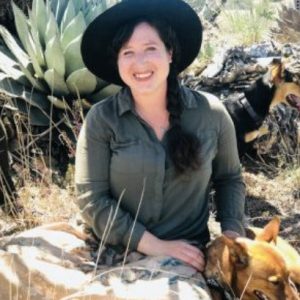
Native Plants for Nocturnal Pollinators, Francesca Claverie, Native Plant Program Director at Borderlands Restoration Network
Which native plants support nighttime insects and pollinators? Not all plants support night life in the same way. Learn which native species are extra special at night, and learn what qualifies and how to point out plants that have nocturnal benefits!
Monday, September 22
- 1-5pm arrival & check-in, buffet
Tuesday, September 23 – Friday, September 26
- 6am Breakfast
- 6:30 – 10:30 hands on ecological restoration for volunteers or ecological restoration education, fun interactive opportunities to participate in easy optional ecological restoration for Eco-Retreaters
- 10:30 “shower break”
- 11:30 lunch and take-out dinner
- 12:15 – 1:45pm 1 expert classe on bats, night time pollinators, nocturnal animals and the habitat they need to survive
- 2:15-5pm Rest, nap, relax
- 5pm Yoga
- 6pm Meditation & Talk
- 6:30pm Call it a day or night time excursions
Saturday, September 27
- 8am Breakfast
- 9am Departure